The international trade in wildlife continues to pose complex challenges for biodiversity conservation, particularly for regions such as the Caribbean where trade routes, enforcement capacity, and cross-border dynamics intersect. From the trafficking of songbirds and other live animals to the exploitation of marine and terrestrial species, these pressures extend beyond national borders and require coordinated international responses.
Against this backdrop, governments gathered in Samarkand, Uzbekistan from 24 November to 5 December 2025 for the Twentieth Conference of the Parties (CoP20) to the Convention on International Trade in Endangered Species of Wild Fauna and Flora (CITES), the global agreement that regulates international trade in endangered species. To engage with these discussions and contribute a regional enforcement perspective, the Caribbean Wildlife Enforcement Network (CAR-WEN) participated in CoP20 alongside government delegations and a broad array of civil society and multilateral observers from around the world.
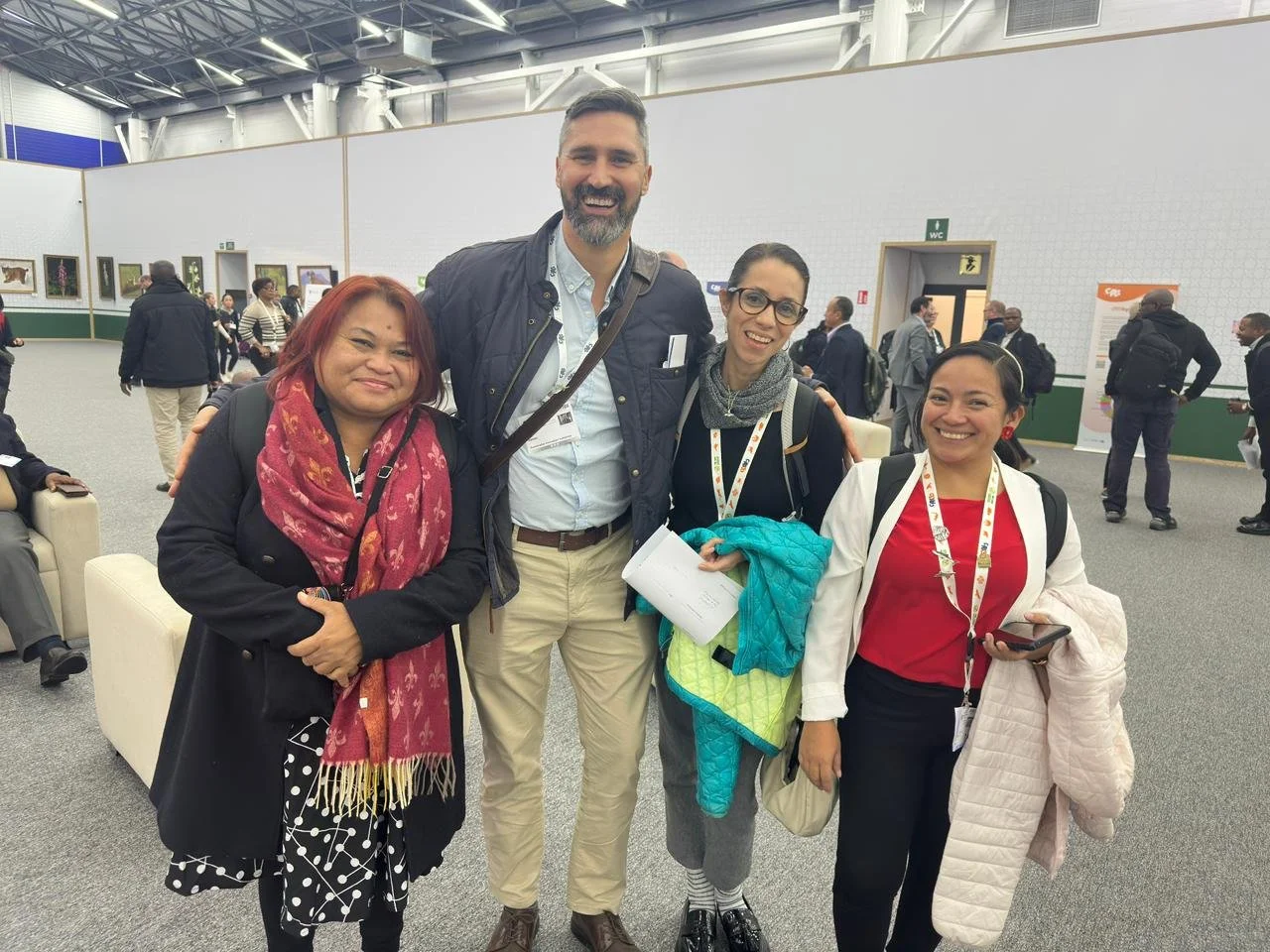
Delegates and observers to CITES CoP20 gathered in Uzbekistan to support ongoing cooperation on the international wildlife trade and advance the mission of the CAR-WEN.
The CITES Convention
The Convention on International Trade in Endangered Species of Wild Fauna and Flora is the primary global framework governing international trade in wildlife. Since its entry into force in 1975, CITES has grown to include 185 Parties that work together to prevent international trade from threatening the survival of wild species.
Its tools include the listing of species in three Appendices with different levels of trade control, the issuance of permits and certificates for legal trade, and a set of agreed procedures to support compliance, reporting, and cooperation among Parties. In practice, this system helps countries distinguish legal trade from illegal trade, strengthens the ability of customs and wildlife authorities to act at borders, and provides a common reference point for enforcement and prosecutions across jurisdictions.
CITES also complements other international biodiversity agreements by regulating international trade in wildlife. In the Wider Caribbean, CITES complements the SPAW Protocol by helping Parties address cross-border trade pressures that can undermine regional conservation efforts. Together, the two agreements reinforce each other: SPAW strengthens cooperation on biodiversity management within the region, while CITES provides shared trade controls and documentation systems that support consistent action when specimens move internationally.
CoP20 Highlights
At CITES CoP20, Parties adopted 34 of the 51 proposals submitted to amend the CITES Appendices, alongside 353 decisions shaping the Convention’s work programme and priorities for the coming period. For the Wider Caribbean, several outcomes stood out for their relevance to regional trade dynamics and enforcement realities, including strengthened trade controls for highly traded songbirds, expanded protections for multiple marine species, and continued attention to priority trade issues that are economically important in the region.
Progress on songbirds was one of the most concrete outcomes for the Southern Caribbean and the Guiana Shield. Parties adopted Proposal 18, listing the Great-billed Seed Finch (Sporophila maximiliani) in Appendix I and listing several closely related seed-finch species in Appendix II under look-alike provisions, including the Chestnut-bellied Seed Finch (Sporophila angolensis), a species frequently associated with trade pressures in parts of the Southern Caribbean, Guyana, and Suriname. These listings strengthen the legal basis for trade controls and directly respond to persistent enforcement challenges linked to species identification and look-alike dynamics in the live bird trade.
CoP20 further delivered major outcomes for marine trade, reinforcing a broader shift towards stronger regulation of high-risk and high-value supply chains. Several high-profile sharks and rays were uplisted to Appendix I, including the oceanic whitetip (Prop. 28), manta and devil rays (Prop. 30), and whale shark (Prop. 31), effectively prohibiting international commercial trade in those species. For Caribbean governments, these outcomes matter because enforcement agencies often face complex fisheries-linked trade, transshipment risks, and capacity constraints for inspections and identification, making clearer international trade rules and documentation requirements operationally important.
The meeting also renewed decisions on queen conch (Strombus gigas), sustaining international focus on one of the Wider Caribbean’s most culturally iconic and economically important traded species, and adopted decisions on marine ornamental fishes, reflecting growing emphasis on traceability and monitoring in aquarium trade chains that can affect reef systems and coastal livelihoods.
Finally, CoP20 brought emerging and unresolved trade concerns into sharper focus. Notably, Proposal 35 to list all anguillid eels (Anguilla spp.) in Appendix II did not pass, but Parties adopted a new resolution on anguillid eels that keeps attention on legality, sustainability, and traceability, and maintains a clear pathway for continued work between CoPs.
CAR-WEN at CoP20
The CAR-WEN Working Group also sought to advance its regional mission and contribute to global wildlife enforcement discussions through a range of activities at CITES CoP20, from convening a side event on the CAR-WEN initiative to strengthening connections with potential partners and wildlife enforcement communities.
The CAR-WEN convened a dedicated side event, The CAR-WEN: Advancing Wildlife Enforcement in the Wider Caribbean, focused on the network and its role in supporting wildlife enforcement cooperation in the Caribbean. The session provided an opportunity to share updates on CAR-WEN’s development, highlight emerging tools and approaches, and discuss the value of structured, multi-country collaboration in addressing wildlife crime.
CAR-WEN members also took part in a side event, Global Wildlife Enforcement Networks, Dialogue on Inter WEN Cooperation, organised by the South Asia Wildlife Enforcement Network (SAWEN). This event importantly facilitated an exchange of perspectives on regional approaches to wildlife enforcement and cooperation.
In parallel, members engaged in informal exchanges with governments, civil society organisations, and international partners throughout the CoP, leading to new learning and exploration of opportunities for collaboration in the Wider Caribbean.
Together, these engagements helped raise awareness of CAR-WEN’s emerging institutional model and reinforced interest in coordinated, cross-regional approaches to wildlife enforcement.

Denny Dipchansingh, Deputy Permanent Secretary (Ag.) of Trinidad and Tobago’s Ministry of Agriculture, Land and Fisheries, was one of several distinguished guests providing special remarks at the CAR-WEN side event.
Looking Ahead
In closing, the outcomes of CITES CoP20 provide an important foundation for continued work in the Wider Caribbean. From implementing new songbird listings and associated decisions, to strengthening enforcement responses across marine trade chains including sharks and rays, queen conch, and marine ornamental fishes, these outcomes point to the continuing practical priority: turning globally agreed rules into consistent action through stronger identification capacity, improved traceability, and coordinated enforcement.
The CAR-WEN Working Group will continue to support these and other efforts by strengthening cooperation among partners and promoting more coordinated, integrated wildlife enforcement across the region.
