What is Wildlife Enforcement?
The CAR-WEN Working Group is laying the groundwork for a formal wildlife enforcement network in the Wider Caribbean, aimed at preventing, reducing, and ending wildlife crimes that threaten biodiversity, natural resources, and the communities that depend on them. That makes one basic question worth answering clearly: what do we actually mean by ‘wildlife enforcement’?
The short answer is that the meaning depends on three related ideas: ‘wildlife,’ ‘wildlife crime,’ and the ‘enforcement actions’ taken to prevent, reduce, and respond to that crime. Change any one of those definitions, and the practical meaning of ‘wildlife enforcement’ shifts with it.
In this post, we unpack those building blocks in plain language and then bring them back together into a clear CAR-WEN Working Group definition of wildlife enforcement as it is used across our work.
Defining ‘Wildlife’
When people hear the word ‘wildlife,’ many picture undomesticated terrestrial animals, especially the species most visible in everyday life or in accessible protected areas and zoos. That narrow meaning is common, but it does not capture the full range of living organisms affected by wildlife crime and enforcement in the Wider Caribbean.
In practice, wildlife can be understood much more broadly than terrestrial animals. It can include marine animals, terrestrial and marine plants, and other forms of biodiversity, such as invertebrates and fungi, with an emphasis on wild, undomesticated organisms and populations. This broader definition matters because wildlife crime in the Wider Caribbean often involves a wide mix of organisms that can be ecologically important and subject to exploitation, trade, or other harmful activities. Examples include terrestrial animals such as parrots, songbirds, and iguanas, and marine animals such as sea turtles, corals, lobsters, conchs, sharks, rays, and eels, as well as terrestrial plants such as wild orchids, cacti, and timber trees, and marine plants such as seagrasses and marine algae.
Just as importantly, wildlife cannot be separated from their habitats and ecosystems without weakening what we are trying to protect. Species depend on the natural systems that sustain them, so harms to habitats and ecosystems often translate directly into harms to wildlife, even when no specimen is visibly trapped, killed, collected, or traded. In the Wider Caribbean, this includes impacts to coral reefs, mangroves, seagrass beds, wetlands, forests, watersheds, and nesting or breeding sites that many species rely on. In real-world terms, this means that illegal activities that degrade ecosystems can be part of the wildlife crime landscape, because they undermine wildlife populations and ecological resilience over time.
For the CAR-WEN Working Group, using a broader definition is practical, not philosophical. Definitions shape action. Scope influences what gets monitored and recorded, which agencies have jurisdiction, what gets prioritised for prevention and response, and what harms are treated as actionable under law and policy. A shared, practical definition helps governments and partners align expectations and coordinate more effectively across the Wider Caribbean.
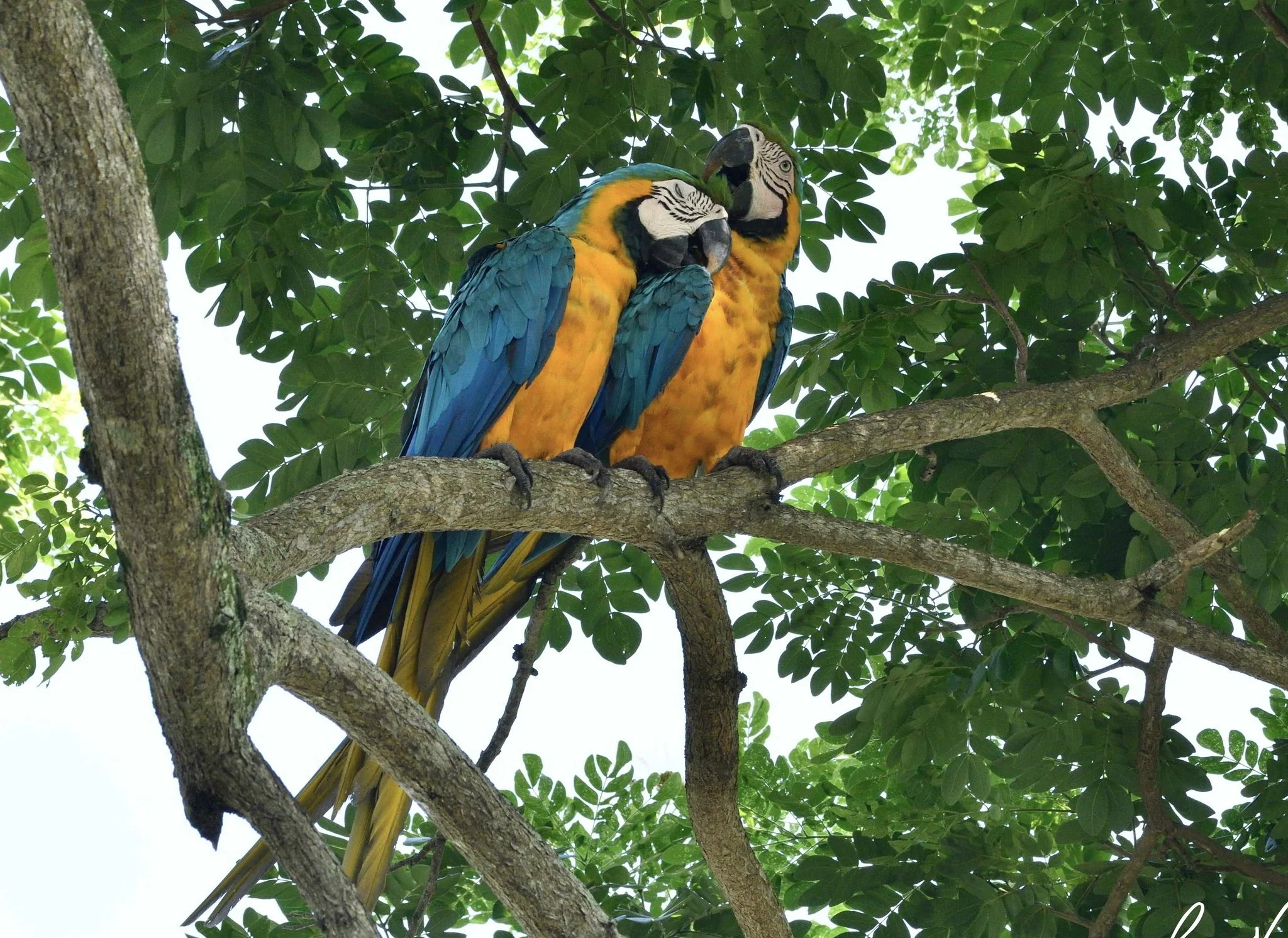
Blue and gold macaws illustrate how many wildlife species depend on healthy habitats for food, shelter, and nesting. Credit: Roger Neckles.
Defining ‘Crime’ and ‘Wildlife Crime’
Like wildlife, ‘crime’ is more complex than it may at first seem. Sometimes wildlife crime is a clear-cut legal violation, an illegal take, an illegal sale, or an illegal shipment moving through a port or airport. Other times it sits in a grey area where harm is real, but the rules are unclear, uneven across countries, difficult to apply in practice, or not in place at all.
In classic definitions, crime is a violation of law or regulation, including commitments under relevant international agreements. ‘Wildlife crime’ is the same idea applied to wildlife, wildlife products, and activities that harm wildlife and their habitats. This definition keeps the concept practical because it maps directly onto what agencies are authorised to act on and what governments can coordinate on through enforcement, compliance, and cooperation.
In practice, however, the legal boundaries of ‘wildlife crime’ are not always consistent. Rules may differ across jurisdictions, creating situations where the same activity is treated very differently from one country to the next. Some laws may be outdated or misaligned with conservation and management realities, leading to loopholes, uneven enforcement, or confusion for both enforcement officers and the public. In other cases, the problem is not that the law is wrong, but that it is incomplete, unclear, or lacks the procedures and capacity needed for consistent implementation.
For the CAR-WEN Working Group, this is why it is important to be precise about ‘crime’ while still recognising grey zones. Regional cooperation works best when participating states have a shared understanding of what is illegal within their jurisdictions and where key differences in laws or regulations may affect cross-border coordination. Paying attention to where rules are unclear, uneven, or missing also helps identify areas where clearer definitions, updated approaches, or stronger legal and regulatory frameworks could improve outcomes over time, while respecting the sovereignty of participating states.
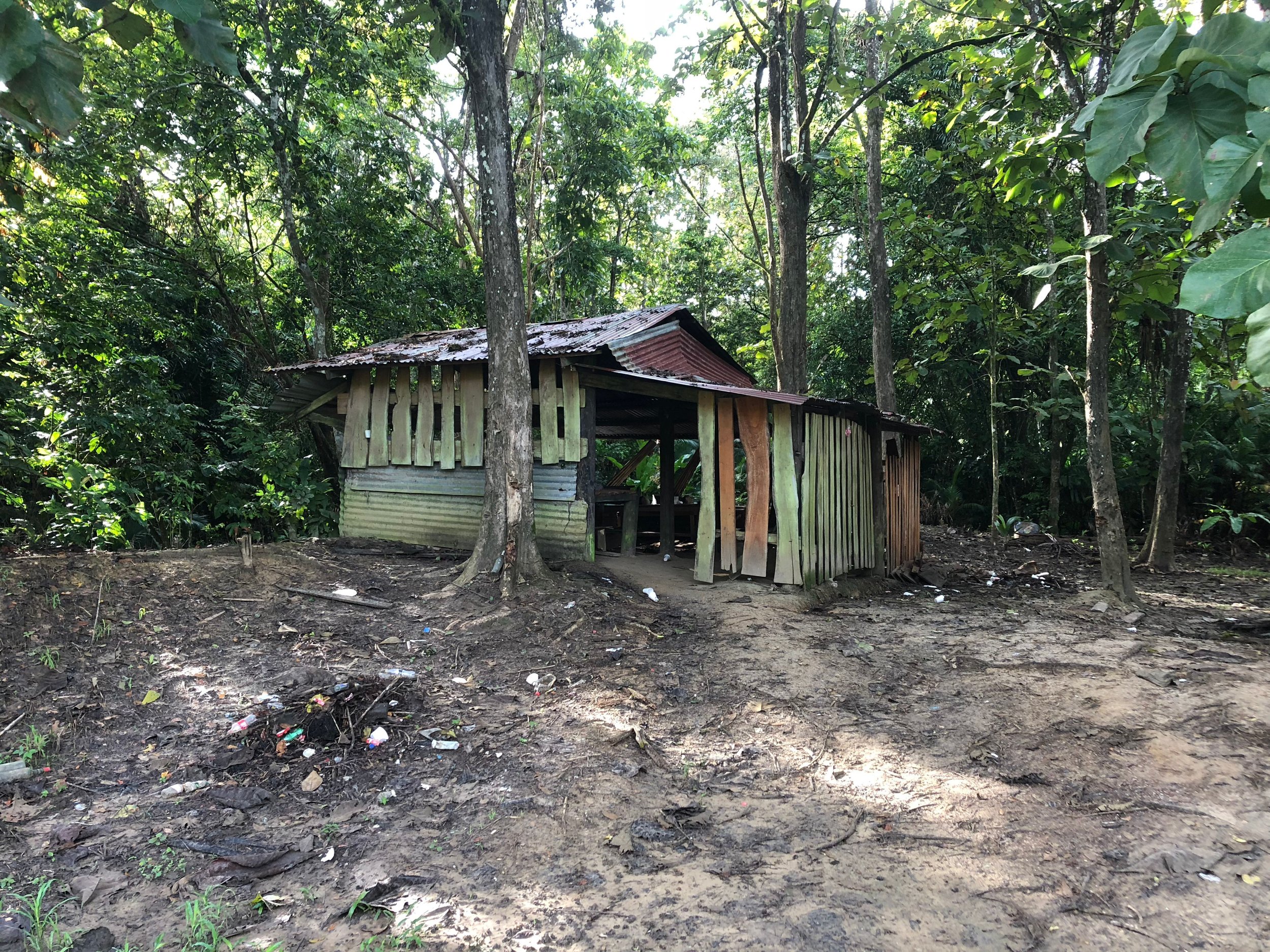
Illegal hunting camps can create legal complexity: in some jurisdictions, a structure used as a dwelling may limit warrantless search while occupied, even if it was built unlawfully. Credit: Nurture Nature.
Defining ‘Enforcement Actions’
When people hear the word ‘enforcement,’ they often picture the most visible parts of law enforcement: patrols, inspections, seizures, citations, and arrests. They also tend to picture enforcement as something done mainly by government agencies. Those actions and actors are central, but they are only part of what it takes to reduce wildlife crime consistently over time.
In practice, ‘enforcement actions’ can be understood more broadly as the full range of actions carried out by diverse societal actors to prevent, reduce, and respond to wildlife crime. This broader view includes the operational work of enforcement agencies and the judicial processes that follow, but it also includes the enabling actions that make enforcement more effective over the long term, especially in complex, cross-border contexts like the Wider Caribbean.
For example, enforcement actions can include broader behaviour change efforts to reduce demand for illegal wildlife products, legal and regulatory reforms to close loopholes and clarify mandates, and biosecurity surveillance and control to strengthen borders against invasive species and associated risks. It can also include knowledge creation and management, such as research, data collection, and analytical tool development that helps agencies understand trends and target limited resources more effectively. In some contexts, it can also include alternative livelihoods development that reduces incentives for illegal activities harmful to wildlife.
This broader view also changes who is part of the enforcement picture. Governments and mandated agencies remain central, but effective enforcement often depends on a wider ecosystem of support. Natural resource users, such as fishers and hunters, play a key role, because day-to-day decisions about legality, seasons, methods, and reporting can either reduce risks or create opportunities for wildlife crime. Civil society organisations can help with monitoring, reporting, and public education. University researchers and technical experts can contribute applied research and analytic support that strengthens decision-making and targeting. Community groups, including those involved in protected area stewardship or that regularly use and value protected areas, can reinforce local compliance and assist in early reporting. Private sector businesses, including pet shops and equipment suppliers, can also influence legality and day-to-day practices in ways that either reduce risks or enable illegal activity. These roles do not replace government authority, but they can reinforce the conditions that make enforcement more consistent and durable.
For the CAR-WEN Working Group, this broader framing is practical. It reflects the reality that improving wildlife enforcement in the Wider Caribbean requires coordinated action across multiple institutions, disciplines, and partners. It also creates a shared understanding of the full range of approaches that can be used to prevent, reduce, and respond to wildlife crime over time.
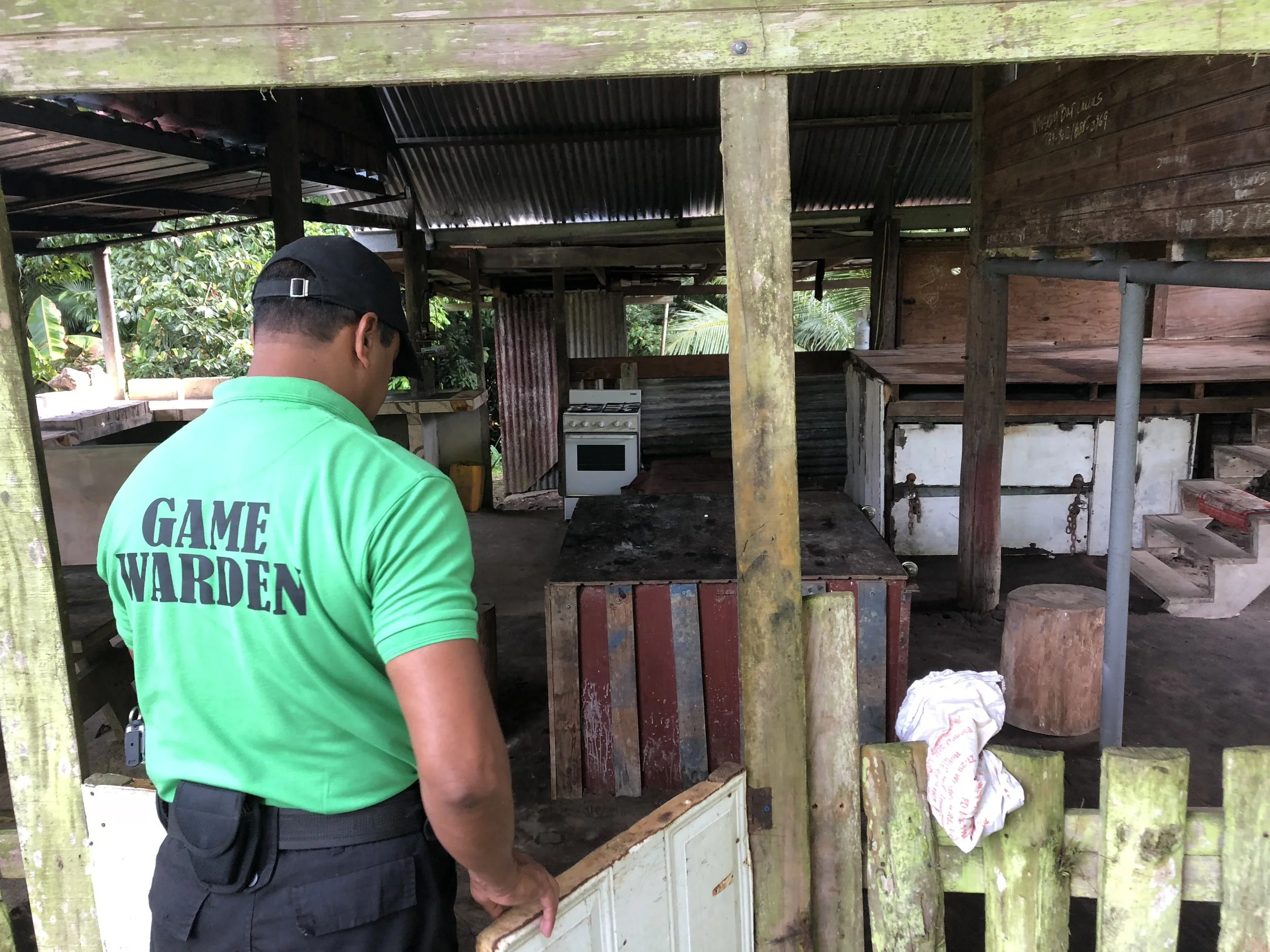
Wildlife enforcement is far more than arrests and seizures. It also includes prevention, monitoring, and the enabling work that makes enforcement effective. Credit: Nurture Nature.
Operationalising ‘Wildlife Enforcement’
Taken together, these definitions point to a practical working meaning of ‘wildlife enforcement.’ For the CAR-WEN Working Group, ‘wildlife enforcement’ refers to the coordinated actions and actors who carry out those actions, to prevent, reduce, and respond to wildlife crimes affecting wild organisms and their natural habitats across the Wider Caribbean. It is a whole-of-system concept that includes the visible law enforcement response, as well as the enabling work that makes prevention, compliance, and multi-jurisdiction coordination possible, and supports more effective wildlife management over time.
You can see this definitional approach reflected in the Working Group’s core materials. The draft MOU defines key terms, including ‘wildlife,’ ‘wildlife crime,’ and ‘wildlife enforcement,’ and outlines a broad set of cooperation areas that together describe what ‘wildlife enforcement’ can involve in practice across participating states. The Strategic Plan builds on that foundation by identifying major wildlife crimes and enforcement challenges affecting the region, and by describing a diverse set of strategies to address them. Similarly, the Rapid Assessment Toolkit is being designed to help partners assess not only clear legal violations, but also the grey-zone conditions that shape outcomes, such as gaps in rules, uneven implementation, and capacity constraints.
Collectively, these documents and tools translate shared concepts into practical guidance. They help the CAR-WEN community, Caribbean governments, and partners align expectations, identify where coordination is needed, and choose an appropriate mix of approaches for different wildlife crime problems and contexts across the Wider Caribbean.
Building Toward Regional Action
The core takeaway is simple: ‘wildlife enforcement’ depends on how we collectively understand the concepts of ‘wildlife,’ ‘wildlife crime,’ and the ‘enforcement actions.’ When those definitions are comprehensive, practical, and shared, governments and partners can coordinate more effectively to choose the right mix of approaches for different wildlife crime challenges across the Wider Caribbean.
Looking forward, the CAR-WEN Working Group will continue using its definition of wildlife enforcement as a practical reference point across its documents, tools, and collaborative work. As the Working Group continues to lay the groundwork for a fully established regional network, this common language will help keep efforts aligned and make it easier to translate shared priorities into real-world action.
